
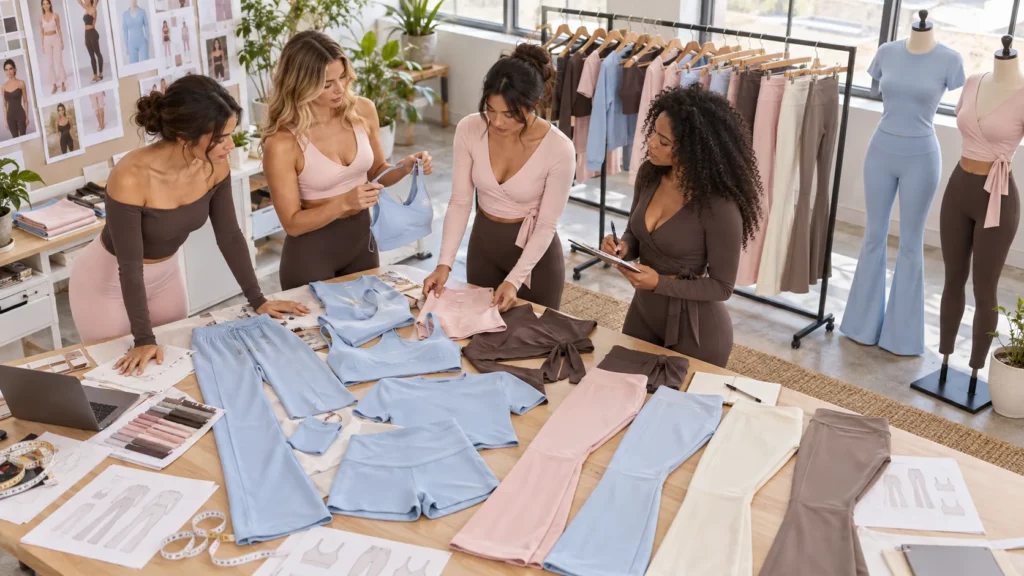
A yoga apparel collection is developed successfully when every style has a defined job, every sample round answers a specific question, and every fit or quality decision is recorded before bulk production. Leggings, sports bras, tops, shorts, and sets must work as a coordinated product system across movement, sizing, materials, branding, and manufacturing. This guide explains a practical workflow for product teams and buyers working with an OEM or ODM partner.
Define the collection architecture before sketching
Start with the customer and the use case, then translate them into a small group of related styles. A studio-focused range may prioritize soft hand feel, stable coverage, and unrestricted movement. A collection intended for dynamic training may need more secure support, stronger recovery, and clearer sweat-management requirements. These are development inputs, not marketing adjectives: each one should influence the garment’s construction, material brief, and test plan.
Build a range map that shows the role of each style, target wearer, intended activity, size range, color family, and relationship to other pieces. A sports bra, legging, top, short, and matching set can share a visual language while using different support or coverage levels. Keep the first range narrow enough to test every style properly.
Match each style to the right construction
Seamless knitting can be useful when the design depends on shaped zones, engineered stretch, or a close-to-body feel. Cut-and-sew construction may be more practical for panel changes, color blocking, printed fabrics, pockets, lining, or a pattern that needs frequent adjustments. The decision should follow the garment’s behavior and the factory’s development capability, not a blanket preference for one method.
For a mixed collection, record the construction choice beside the reason it was selected. Note the areas that must be verified in sampling, such as waistband recovery, armhole comfort, opacity during a deep bend, or the transition between different knit structures. Xuanfei’s current product range is centered on yoga clothing and seamless development, while its published company information also describes OEM/ODM collaboration. Review the yoga clothing range before sending a brief so the requested styles can be discussed against a real product scope.
Turn the concept into a sample plan
A sample is a decision tool, not simply a visual preview. Before the first sample, prepare a usable product brief with sketches or references, construction preference, measurement chart, fabric direction, size range, colors, logo placement, label and packaging needs, target quantity, and the performance questions that matter most. Separate fixed requirements from areas where the development partner may suggest a technical alternative.
Give each sample round one purpose. The first round can confirm proportion, construction, and general fabric behavior. The next can focus on measurements, support, coverage, recovery, and movement. A pre-production sample should verify the final material, trims, branding, grading, and workmanship against the approved specification. This prevents a team from approving a sample for appearance while leaving the risk-bearing details unresolved.
Record feedback in numbered comments tied to a measurement, photo, or garment location. State what changed, why it changed, and whether the change requires a new pattern, knitting program, fabric lot, or trim. Keep one version-controlled specification file so the supplier is not working from an earlier comment set.
Run fit testing in static and dynamic positions
Fit testing should combine a measurement check with movement-based evaluation. First review the garment on the intended body size in a neutral stance: shoulder balance, rise, waistband position, bust coverage, leg opening, and overall length. Then test the positions that represent the product’s use, such as squats, forward folds, lunges, twists, overhead reaches, and repeated stretching. A garment that looks balanced on a hanger can pull, roll, gape, or become transparent when the wearer moves.
Use a consistent checklist for every size and style. Check pressure points at seams or knit transitions, whether the waistband stays in place, whether straps migrate, whether the crotch or underarm area restricts movement, and whether the garment returns to shape after repeated extension. For close-fitting items, assess coverage under stretch and during a deep bend. For supportive bras, compare the intended support level with the activity rather than relying on appearance alone.
Test more than one body when possible. A single fit model can confirm the base size but cannot reveal grading problems, inconsistent recovery, or pressure differences across the size range. Capture the condition, action, size, and observed issue in each fit note. That record makes it easier to distinguish a pattern problem from a fabric, construction, or size-grading problem.
Convert fit findings into controlled revisions
After testing, group findings into priority levels. Safety, coverage, severe restriction, or a garment that cannot stay in position should be resolved before aesthetic refinements. Next address comfort, support balance, and durability risks. Only then should the team fine-tune line placement, color blocking, or decorative details. This order keeps the revision cycle tied to the wearer rather than to subjective preference.
Ask the development partner to explain the likely cause of each issue and the proposed correction. A waistband that rolls may require a change in width, tension, recovery, or construction; lengthening the garment alone may hide the symptom without solving it. Approve a revised sample only after the change has been tested in the same positions and sizes that exposed the original problem.
Set quality-control gates before bulk production
Quality control begins with the approved reference, not with a final random inspection. Define the material and workmanship characteristics that must remain consistent: fiber blend or fabric direction, weight where relevant, stretch and recovery, opacity, color, pilling risk, seam or knit consistency, logo placement, labels, packaging, and measurement tolerances. The exact criteria depend on the style and material, so record them in the product specification rather than relying on a general promise of quality.
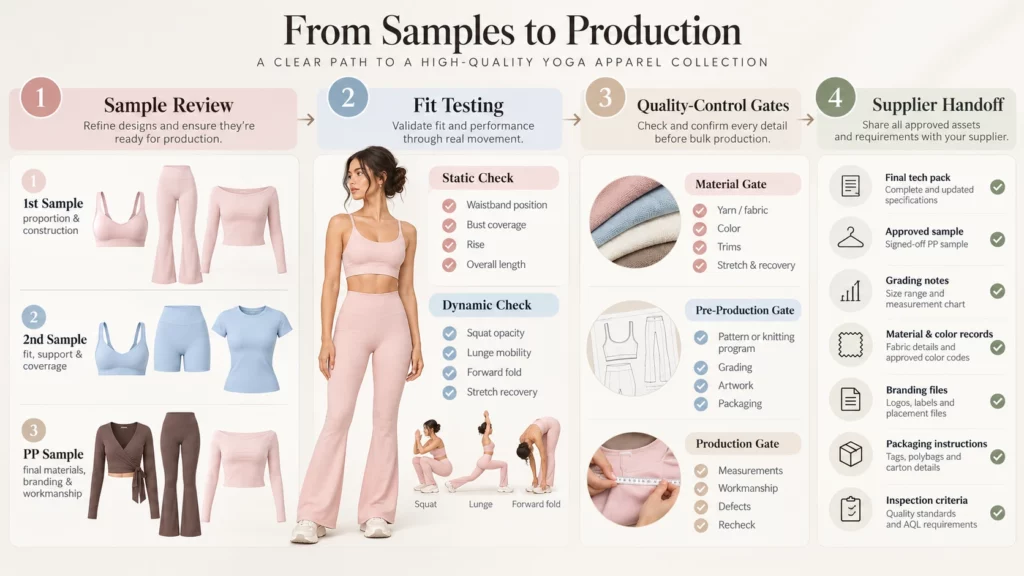
Use three practical gates. At the material gate, confirm the selected fabric or yarn, color, trims, and any required test information. At the pre-production gate, compare the approved sample with the final pattern or knitting program, grading, artwork, and packaging instructions. At the production gate, inspect finished pieces against the approved reference and document defects, corrections, and rechecks. A second inspection is useful only when the inspection points and acceptance rules are defined.
For a seamless collection, include checks for the transition between knitted zones, elastic behavior after repeated stretching, and any areas where uneven tension could create rippling. For cut-and-sew styles, include panel alignment, seam security, stitch consistency, pocket placement, and waistband attachment. Keep the same checklist for pilot quantities and repeat orders so changes can be traced instead of judged from memory.
Prepare a supplier handoff that supports repeatability
A complete handoff includes the final tech pack or specification, approved reference sample, measurement and grading notes, material and color records, branding files, packaging instructions, fit comments, inspection criteria, and a list of open changes. Ask who owns each file, how revisions are approved, and how a material substitution is handled. The aim is to make the approved product reproducible, not just to get one attractive sample.
Xuanfei presents its work around seamless activewear, product development, sampling, customization, and production coordination. Compare the supplier’s answers against the brief: construction, sizes, materials, sample revisions, branding, quantity, and inspection requirements. For background on the company’s current manufacturing scope, review the company’s manufacturing background.
Conclusion
Developing a yoga apparel collection is a sequence of controlled decisions: define the role of each style, choose construction by behavior, plan samples around specific questions, test fit in real movement, and release bulk production only against a written reference. This workflow helps a product team find problems while they are still inexpensive to correct. It also gives an OEM or ODM partner the information needed to reproduce the approved fit and quality across a complete range.
Frequently Asked Questions
How many styles should a first yoga apparel collection include?
Choose a focused set that covers the primary use case without exceeding the team’s ability to sample and test each piece. The right number depends on size range, material variation, minimum quantities, budget, and the amount of revision expected.
What should be tested on a yoga apparel sample?
Check measurements, balance, stretch and recovery, coverage, pressure points, support, waistband or strap stability, movement freedom, and appearance after repeated extension. Test both the intended base size and additional sizes when possible.
When is a sample ready for bulk production?
Approve it only after the final material, construction, grading, branding, packaging, measurements, and inspection criteria are documented and the garment passes the agreed static and dynamic fit checks.
How can a brand reduce fit-related returns?
Use a clear measurement chart, test representative body sizes, evaluate real movements, record fit comments precisely, and repeat the same checks after each material or construction change. Do not approve a revised sample from appearance alone.
A practical next step for your development brief
Prepare the customer profile, style list, construction preference, size range, fabric direction, branding requirements, target quantity, and the movements you need to test. When the brief is ready, contact the Xuanfei team with the details that affect fit and production feasibility. Visit Xuanfei to review the current company scope.