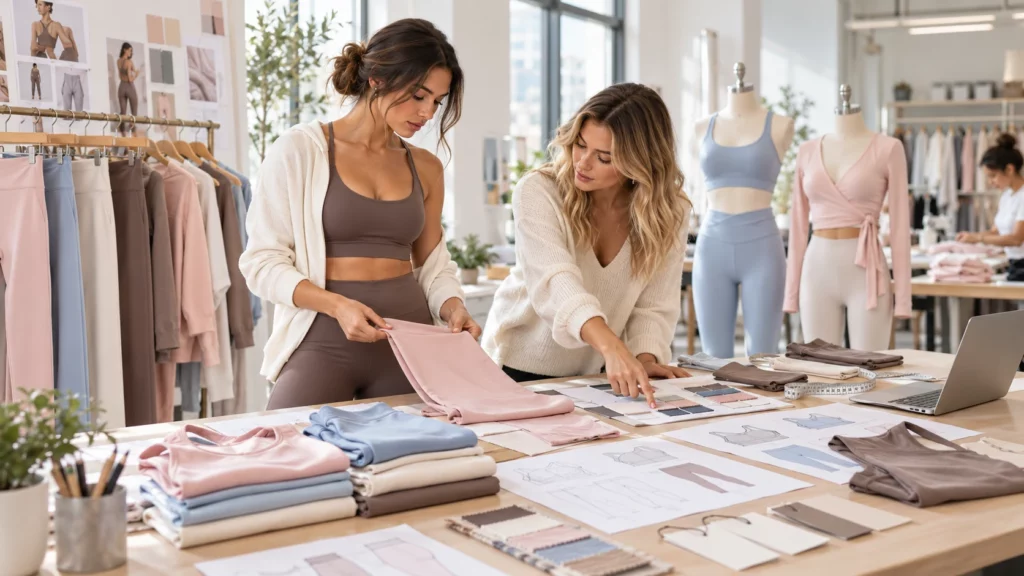
Starting a private-label yoga clothing brand is a product development project before it becomes an inventory project. The first collection has to fit a customer, carry the right branding, and be repeatable in production. A factory quote is useful only after those decisions are clear.
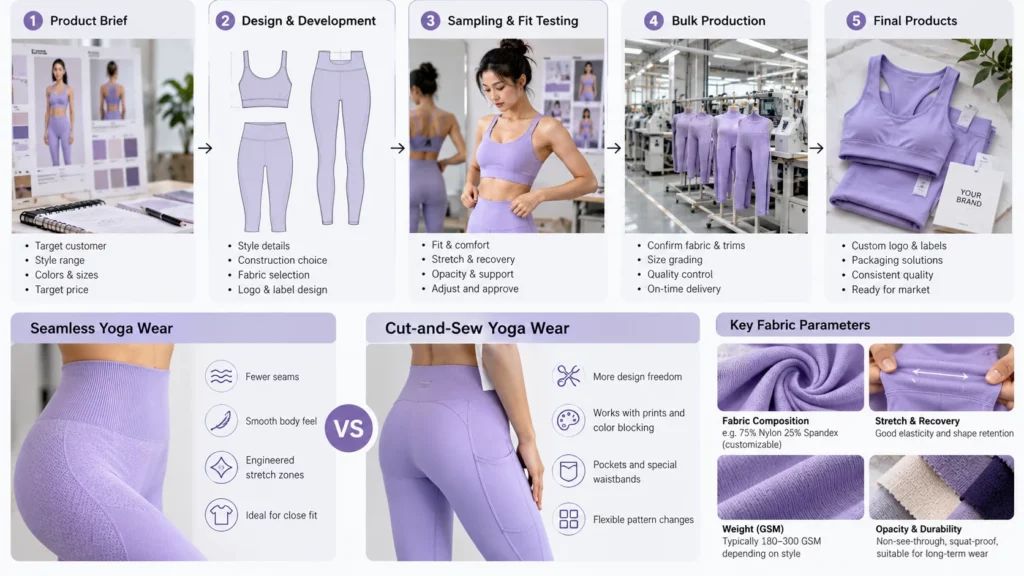
The practical path runs from a focused brief to construction choices, sampling, approval, a controlled first order, and repeatable bulk production. These steps are intended for founders, boutique owners, and activewear buyers working with an OEM, ODM, or private-label manufacturer. They apply to seamless garments, cut-and-sew garments, or both.
Define the customer and the first collection
Begin with the person who will wear the product. A yoga studio customer may prioritize softness, freedom of movement, and a clean silhouette. A customer who wears the same pieces for training and travel may need stronger recovery, pockets, or more coverage. These priorities affect fabric, construction, colors, and the price the collection can support.
Keep the first range narrow enough to manage. Choose related styles, such as leggings, a bra, a top, and a layer, then define the activity, size range, colors, target retail price, and launch channel. A short collection gives the factory clearer instructions and shows which styles deserve a second order.
Choose seamless, cut-and-sew, or a combination
Seamless yoga wear is knitted into a shaped garment with fewer sewn seams. It can be useful when the design depends on a close fit, engineered stretch zones, or a smooth body feel. The development work depends on the knitting program, yarn behavior, shaping, and finishing, so a sample should be assessed on the body and in motion.
Cut-and-sew yoga wear is assembled from fabric panels. It may be the better route for color blocking, printed fabric, pockets, lining, special waistbands, or pattern changes that need to be tested quickly. It also offers a different way to control support and grading across sizes.
There is no universal winner. Ask which construction fits each style and what a change would do to the sample, material use, minimum order, and production timing. Xuanfei supports both methods, which can help a brand keep one development conversation across a mixed collection.
Turn the idea into a usable product brief
A manufacturer cannot price an idea accurately if important decisions are hidden. Prepare sketches or reference garments, a measurement chart, fabric preferences, size range, colors, logo files, label requirements, packaging needs, target quantity, and launch timing. Separate fixed requirements from areas where you want technical suggestions.
Describe the garment by performance as well as appearance. Note whether the legging should feel light or compressive, whether the bra is for studio movement or higher-impact use, and whether the waistband needs firm recovery. Squats, bends, twists, and repeated stretching can reveal fit issues that are invisible on a hanger.
This brief becomes the reference point for quotations and revisions. It also shows whether a factory can develop a product or only repeat an existing style.
Choose the right private-label service model
Private label, OEM, and ODM are used differently from one apparel supplier to another. In practical terms, OEM usually starts with your specifications. ODM may start with a factory block, a design direction, or a development suggestion. Private label often means an approved garment is produced with your logo, labels, and packaging.
Ask what the quote includes: pattern changes, fabric sourcing, grading, logo application, labels, packaging, and sample revisions. Put ownership of custom artwork and patterns in writing, and agree on file confidentiality. A low unit price is less useful if essential development work is excluded.
Review the manufacturer’s current yoga wear collection and company and manufacturing background to understand its product scope before sending the brief.
Treat sampling as a decision process
The first sample is a working version, not a final product. Review measurements, balance, stretch and recovery, opacity, seam pressure, waistband behavior, logo placement, and movement. Test the intended size range when possible rather than approving one size by appearance alone.
Send fit comments in a numbered format with a photo, measurement, or clear location for each change. Ask the factory which changes can be made in the current sample and which require a new pattern, knitting program, or fabric lot. Before bulk production, approve one reference sample and one written specification set. That approval should be the standard used for inspection.
For seamless development, also review the transition between knitted zones, the recovery after stretching, and the feel of the finished garment. Xuanfei’s published discussion of Body Memory seamless comfort technology can provide background for a conversation about seamless comfort, while the exact result still needs to be confirmed on the chosen style and fabric.
Confirm materials, branding, and packaging
A fabric name alone does not define the product. Confirm the fiber blend, weight, stretch and recovery, opacity, pilling resistance, colorfastness, and care information that matter to the garment. Record approved colors and material lots so a repeat order can be compared with the original sample.
Branding should be specified at the same time as the garment. Decide on heat-transfer or sewn logos, main labels, size labels, care labels, hangtags, folding, polybags, cartons, and barcode requirements. Ask who supplies each component, what the minimums are, and how unused branded materials are handled. Packaging can add cost and time when it is left until the end.
Compare MOQ, pricing, and timing as one plan
Request the sample charge, revision policy, minimums by style and color, material minimums, payment terms, and expected timing for fabric preparation, sampling, approval, production, inspection, and shipping. Put every supplier’s answer in the same comparison sheet. A low quoted unit price may depend on a quantity that leaves a new brand with too much inventory.
For a first collection, the right question is not simply whether the MOQ is low. Ask what quantity allows the factory to achieve stable quality without creating an unmanageable stock position. Confirm what happens if a color or size needs to be adjusted, and identify the person who will report schedule changes.
A supplier’s stated capacity should be checked against the actual order. Xuanfei presents a 5,000-square-meter factory, more than 300 new styles per year, quick sampling, OEM/ODM support, and double quality inspection. Treat these as points to verify for your specific styles, quantities, and production route.
Run a controlled pilot before bulk production
A small production test can reveal problems that a development sample cannot. Check the approved fabric lot, grading, color matching, stitch or knit consistency, logo placement, packaging, carton marks, and inspection records. Compare finished pieces with the approved sample, not a product photo.
Agree on what counts as an acceptable defect before the order starts. Ask how defects are recorded, corrected, and checked again. Double inspection is useful only when the inspection points are defined and the results are documented. If the factory cannot explain how a repeated problem is prevented, the same issue may return in the next production run.
Keep a version-controlled specification file for artwork, measurements, color references, comments, and approvals. Many production mistakes happen when a factory works from an older instruction that looked correct at the time.
Build the reorder system while launching
A private-label brand becomes easier to manage when the first order leaves a usable record. Save the final tech pack, sample photos, fabric and trim details, grading notes, inspection criteria, packaging instructions, and production quantities. Record accepted and open changes.
Use the first sales period to review return reasons, fit comments, color performance, size demand, and which styles are bought together. Feed that information into the next brief. A manufacturer that supports repeat orders and controlled changes is more valuable than one offering only an attractive first quotation.
Conclusion
Starting a private-label yoga clothing brand is a sequence of decisions: define the customer, choose the right construction, document the product, approve the sample, and control the first bulk order. Seamless and cut-and-sew garments can both belong in the same collection when each style is matched to the construction and tested on the body. Clear specifications and disciplined approvals give a new brand a better chance of producing the same product it intended to sell.
Frequently Asked Questions
How much should a first private-label yoga clothing collection include?
Start with a focused group of related styles that can share colors, materials, and a clear customer use case. The exact number depends on budget, minimums, size range, and the amount of development support required.
Should a new brand choose seamless or cut-and-sew yoga wear?
Choose the construction that fits the design and performance needs of each style. Seamless can suit shaped, close-to-body garments, while cut-and-sew can simplify panels, prints, pockets, lining, and fast pattern changes.
What should be approved before bulk production?
Approve the reference sample, measurements and grading, fabric and colors, branding placement, labels, packaging, inspection criteria, quantities, and the final specification version. Record the approval in writing.
How can a private-label brand reduce first-order risk?
Wear-test samples, compare suppliers on the same criteria, use a pilot run when practical, and avoid changing materials or construction after bulk production has started. Keep enough documentation to make the next order repeatable.
A practical next step for your brand
Prepare one brief for two or three initial styles, including the customer, construction preference, fabric direction, size range, branding, target quantity, and launch timing. Send the questions to each manufacturer and compare answers beside the samples. When you are ready to discuss a specific collection, contact the Xuanfei team.


