OEM and ODM describe two different starting points for developing yoga clothing. With OEM, the brand generally brings the design and product requirements, and the manufacturer produces to the approved specification. With ODM, the manufacturer brings an existing design or product base that the brand can select and, where offered, adapt. The right choice depends on how much design control, development input, and ownership clarity your launch requires, not on a universal promise that one route is cheaper or faster.
OEM and ODM in Plain Terms
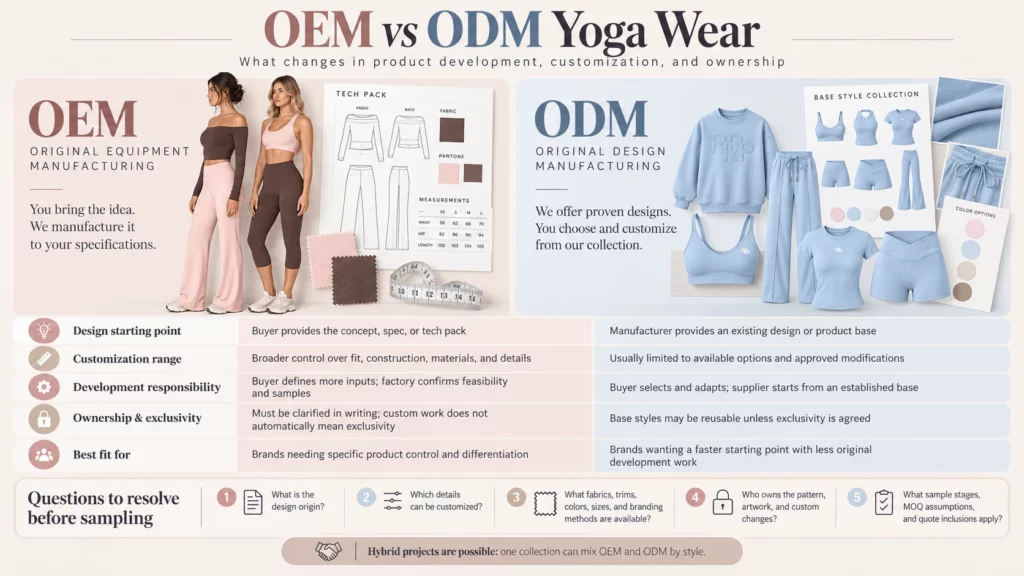
OEM (original equipment manufacturing) is commonly used when a brand has a defined product concept, technical package, or specification and needs a factory to make it. For yoga wear, that can mean the brand specifies the pattern direction, fabric, construction, color, trims, branding, measurements, and quality requirements. The manufacturer still needs to confirm feasibility, clarify tolerances, and develop samples before bulk production. OEM does not mean that a sketch alone is production-ready.
ODM (original design manufacturing) generally starts with a design, pattern, or product platform developed by the manufacturer. A brand chooses from that starting point and may request available changes such as color, logo, label, or selected construction details. The exact customization range varies by supplier and style. An ODM offering can be a useful way to begin product development when the brand has a clear market direction but has not created every pattern and specification from scratch.
These labels are not applied identically by every factory. One supplier may use OEM for production to a buyer’s specification; another may use it broadly for customized manufacturing. Ask the supplier to describe the actual design origin, development work, approval steps, and rights attached to each style. The written scope matters more than the acronym.
Where Private Label Fits
Private label describes how a product is presented under a retailer’s or brand’s name; it does not by itself explain who created the original garment design. A private-label yoga set could be based on an ODM style with the buyer’s branding, or it could be an OEM product made to the brand’s own specifications. In other words, private label and OEM/ODM answer different questions: who sells the product under whose brand, and who provides the design or product starting point.
That distinction is useful when mapping your launch. If you are working through the wider brand setup, keep the manufacturing-model decision separate from the steps in starting a private-label yoga clothing brand. Here, the decision is narrower: how much of the garment’s design and development your team will define versus select from a manufacturer’s offering.
What Changes Between the Two Models
The most useful comparison is not a blanket cost or speed claim. Compare the work, decisions, and rights attached to your particular product.
Design control. OEM gives the brand more direct control over the intended pattern, details, and specification, provided the factory can execute them. ODM starts from a manufacturer-developed base, so the brand’s control is limited to the options and changes the supplier agrees to support. Ask what can change without creating a new development project.
Development responsibility. An OEM buyer usually needs to supply more complete inputs and make more product decisions. An ODM buyer can begin with an existing design direction, but still needs to review fit, fabric, measurements, branding, and sample revisions. Neither route removes the need for a clear brief or approvals.
Product distinction. A custom OEM style can support a brand’s specific fit or construction idea, but does not automatically create legal exclusivity. An ODM base may be offered to other buyers unless the parties agree otherwise. Before committing, clarify whether the pattern or design is exclusive, what may be reused, and who owns buyer-supplied artwork, tech packs, and custom changes.
Commercial terms. Sampling fees, minimum order quantities, production capacity, lead time, and unit pricing depend on the garment, materials, order mix, and supplier terms. Do not assume ODM means low MOQ or OEM means a higher price. Request a like-for-like quotation that identifies what is included, what is optional, and what changes could affect the price or schedule.
Which Model Fits Your Yoga Wear Project?
OEM may be a better fit when your team has a defined product brief and needs specific control over a silhouette, fit block, fabric combination, seam placement, pocket, or support detail. This is relevant when the garment itself is central to the brand’s differentiation. Before choosing OEM, check whether the factory can develop the requested construction and confirm what files, measurements, and sample feedback it needs from you.
ODM may suit a brand that wants to evaluate an established product base and focus its early decisions on assortment, color, branding, and market positioning. It can reduce the amount of initial design work the buyer must originate, but it still requires careful fit review and written confirmation of modifications, available sizes, material options, and any design-use restrictions.
Some projects combine the two. A brand might select an existing legging base, then request a custom waistband, color, or pocket; another style in the same range may be developed from the brand’s own package. Treat each style as a defined scope instead of assuming one label will describe every product in the order.
Questions to Resolve Before Requesting Samples
A short written brief can expose a mismatch before you spend time on sampling. Ask the manufacturer to answer these points for each style:
- What is the design starting point: a buyer-supplied tech pack, a manufacturer pattern, or a combination?
- Which details can be customized, and which require new pattern or material development?
- What fabric, trims, color options, size range, and branding methods are available for this specific garment?
- Who owns or may reuse the base pattern, custom changes, artwork, and technical files, and is any exclusivity agreed in writing?
- What sample stages, fit comments, measurement tolerances, approval records, MOQ assumptions, and quote inclusions apply?
For yoga apparel, make the brief concrete. Specify intended activities, coverage and support expectations, target size range, fit preference, and priority movement checks. If the project calls for a particular manufacturing construction, compare it against the garment’s needs; seamless and cut-and-sew yoga wear is a separate construction decision from whether the design starts as OEM or ODM.
Then check that the supplier’s relevant experience matches your product family. Xuanfei’s activewear manufacturing capabilities include OEM, ODM, private-label service, product development, and sampling. For any supplier, confirm which of those apply to your exact style rather than relying on a broad service label.
If you are assessing the factory as well as its manufacturing model, use the separate yoga wear manufacturer selection guide to review supplier fit, communication, sampling, and production questions.
Conclusion
The core difference is the design starting point: OEM typically follows a buyer-defined product specification, while ODM typically adapts a manufacturer-developed design or base. Private label concerns branding and can sit alongside either model. Choose by the control and development work your project needs, then confirm customization limits, fit approvals, commercial terms, and intellectual-property ownership in writing. For a style-specific assessment, contact Xuanfei’s team with your product type, design starting point, target quantity, and the details you want to customize.
Frequently Asked Questions
Is ODM the same as private label?
No. ODM describes a manufacturing arrangement that begins with a manufacturer-developed design or product base. Private label describes selling a product under the buyer’s brand. A private-label product may be based on ODM or OEM work.
Is OEM always more expensive than ODM?
Not necessarily. Price depends on style complexity, material, development scope, quantity, and the supplier’s quote. Compare what each quotation includes, including pattern work, sampling, branding, packaging, and any tooling or setup charges.
Can an ODM yoga style be customized?
Often some options are available, but the permitted changes vary by supplier and base style. Confirm the exact fabric, fit, color, trim, logo, label, and construction changes before approving a sample, and clarify whether a requested change affects exclusivity or cost.