
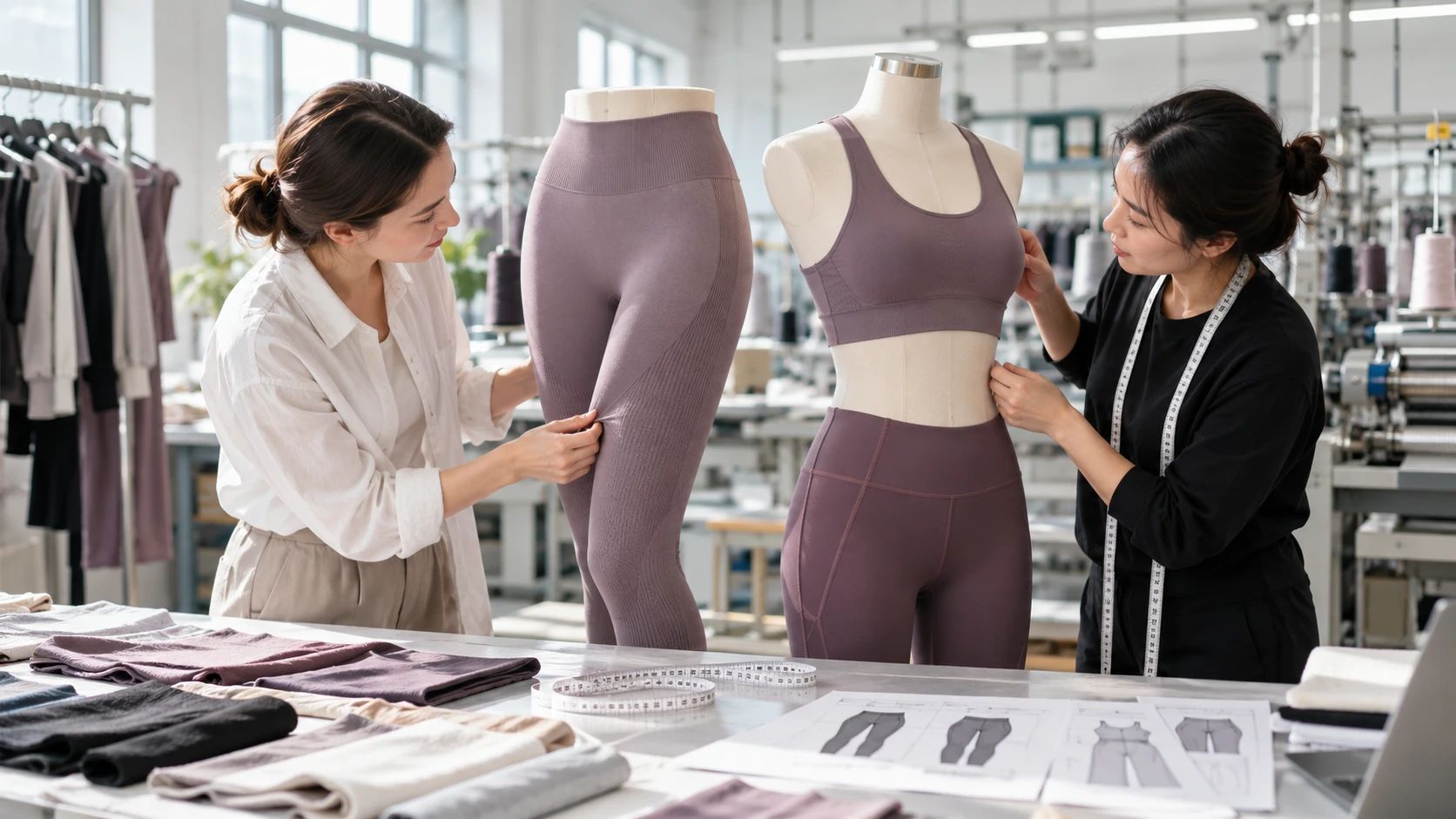
A factory can make a pair of leggings and still be a poor fit for a growing label. The difficult part is finding a partner that can develop the garment you have in mind, hold the fit from one size to the next, and repeat the result after the first launch. Price matters, but it is only one line in that decision.
For a yoga collection, look at the work behind the finished garment: construction, fabric and fit, sampling, and production checks. The questions below apply to brands comparing an OEM, ODM, or private-label manufacturer, whether the range uses seamless knitting, cut-and-sew construction, or both.
Define the collection before you request a quote
A vague brief produces a vague quotation. Before contacting factories, write down what the first collection must do. Include the garment types, intended activity, size range, colors, target retail price, sales channel, and the level of support you expect from each style.
Performance language helps more than a product name. Explain whether a legging should feel soft or compressive, whether a bra is for studio movement or higher-impact training, and whether the waistband needs firm recovery. Add sketches, measurements, logo files, and packaging requirements. Mark which decisions you want the manufacturer to make so you can separate development from production.
Ask which construction fits each style
Seamless and cut-and-sew yoga wear solve different production problems. Seamless knitting can create a close-to-body garment with fewer sewn seams and engineered zones of stretch. It depends on knitting programs, yarn behavior, shaping, and finishing, so the sample needs to be judged while moving, not only when it is laid flat.
Cut-and-sew construction starts with fabric panels and joins them with selected seams. It is often useful when a design needs color blocking, printed fabric, pockets, lining, a special waistband, or a panel change that must be tested quickly. It also gives the development team a different set of options for controlling fit and support.
The useful question is not which method is superior. Ask the factory to explain why a particular route suits each style, where the limitations are, and what changes would require a new sample. Xuanfei supports both seamless and cut-and-sew yoga wear, which can be useful when a single collection needs both construction methods.
Check the fabric and fit process
A fabric name does not tell you enough. Request the fiber blend, weight, stretch and recovery behavior, opacity, pilling resistance, colorfastness, and care information that are relevant to the garment. A brushed studio legging and a training short do not need the same balance of softness, recovery, and abrasion resistance.
Ask how approved colors and fabric lots are recorded, and how a repeat order is compared with the approved sample. Confirm whether you may supply fabric, have the factory source it, or start with an existing option before development begins.
Ask for the measurement chart, grading method, stretch allowance, and fitting procedure. Wear the sample through squats, bends, twists, and repeated stretching; movement can expose a rolling waistband, pulling rise, transparent fabric, or a seam that presses.
Clarify OEM, ODM, and private-label services
The labels are not used consistently across the apparel industry, so ask what the service includes rather than relying on the abbreviation. OEM usually means the product starts from your specifications. ODM may begin with a factory block, existing design direction, or development suggestion. Private label normally means an approved product is made with your branding, labels, and packaging.
A young brand may use an existing block for a first test, then invest in original patterns after sales data supports expansion. Put ownership of patterns, artwork, and custom changes in writing, and confirm logo application, label formats, and file confidentiality before a style sells.
Compare MOQ, sampling, and timing together
A low unit price can hide expensive development work or an order quantity that is too high for a new brand. Ask for the sample charge, the number of revision rounds, minimums by style and color, material minimums, payment terms, and the expected timing for each stage. Then compare the answers in one sheet so that every factory is being judged on the same basis.
The better MOQ question is what quantity reaches stable quality without creating unmanageable inventory. Even a small test needs enough material and setup time. Request dates for fabric preparation, sampling, approval, production, inspection, and shipping, plus the person who reports changes.
Look for evidence of quality control
Quality control should be visible as a sequence of checks. Ask what happens when material arrives, while garments are being made, and before cartons are sealed. For yoga wear, the list may include measurements, seam and stitch consistency, stretch and recovery, shade matching, logo placement, appearance, and packaging accuracy.
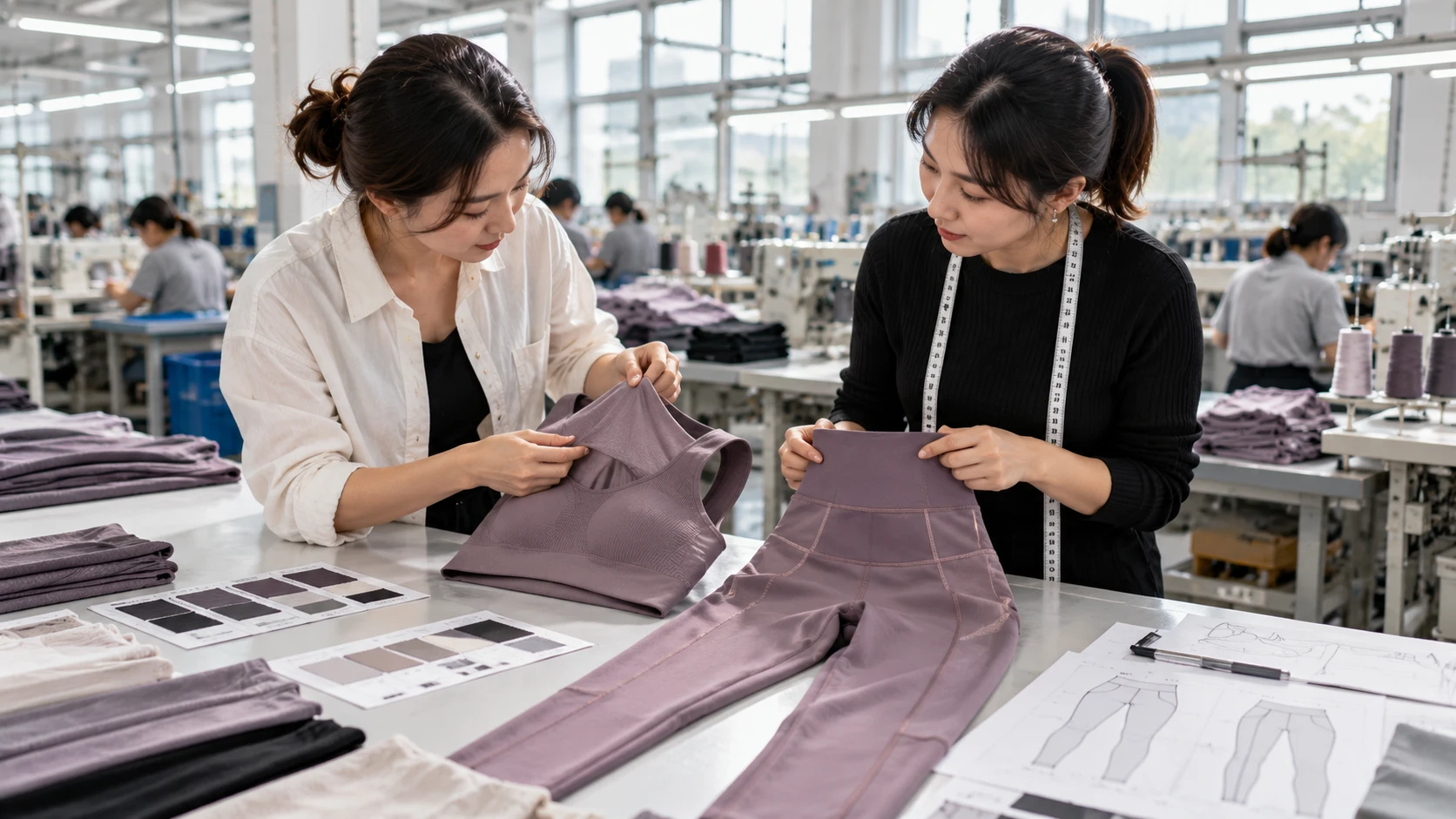
Ask how defects are recorded and corrections verified. A second inspection helps, but it cannot replace a reference sample and written acceptance criteria. If the factory cannot explain prevention, the defect may return next season.
Pay attention to the development conversation
The first exchange with a manufacturer is useful evidence. A serious development team will ask about support level, fabric behavior, measurements, movement, branding, and the reason behind a design choice. It may point out that a requested seam, pocket, or knit structure affects cost or fit. That kind of question is more valuable than a fast price list with no technical context.
Keep one shared file for artwork, measurements, colors, comments, and approvals. Identify the latest version and who may approve changes; otherwise a factory can make a correct sample from an outdated instruction.
Match factory capacity to your next stage
A large factory may suit a mature label, while a smaller development team may be more responsive early on. Ask how it balances samples and repeat orders, how many styles it develops at once, and which products it makes regularly. Judge capacity against your next order.
Xuanfei Knitting Co., Ltd. presents a 5,000-square-meter factory, more than 300 new styles per year, quick sampling, OEM/ODM support, and double quality inspection. Treat those points as a starting list for verification. Ask for current examples, the production route for your styles, and the quality checks that would apply to your order.
Make the final comparison on the same criteria
Once proposals arrive, score each yoga clothing manufacturer against a short, consistent list:
- Can it make the construction and performance the collection requires?
- Are sampling, fit revisions, and technical decisions explained clearly?
- Are MOQ, material requirements, payment terms, and timing written down?
- Are inspection stages, reference samples, and acceptance criteria specific?
- Can the team support repeat orders and a wider collection later?
Choose the partner with the clearest path from brief to approved product. Before committing to a large run, wear-test the sample and, where practical, use a small production test. This gives the brand a chance to discover process problems while the cost of changing direction is still manageable.
Conclusion
Choosing a yoga wear manufacturer is both a product and relationship decision. Review construction knowledge, fabric and fit development, sampling, quality records, communication, and capacity together. A clear brief, approved sample, and written production plan reveal more than a low opening quotation.
Frequently Asked Questions
Can a yoga wear manufacturer produce both seamless and cut-and-sew garments?
Some manufacturers do both. Confirm the equipment, development experience, and checks for each route; skill in seamless knitting does not prove cut-and-sew capability, or the reverse.
What should a brand send when requesting a quote?
Send sketches or a tech pack, fabric preferences, sizes, colors, branding, target quantity, packaging requirements, and launch timing. Mark fixed decisions and areas where you want suggestions.
How can a new brand reduce the risk of a large first order?
Wear-test samples, approve a reference sample in writing, define inspection criteria, and use a small production test when practical. Compare each factory’s documentation, not only its first unit price.
A practical next step for your brand
Prepare one product brief and send the same questions to several manufacturers. Include one seamless style and one cut-and-sew style if the collection may use both. For background, review the yoga wear collection, company and manufacturing background, and Body Memory seamless comfort technology. When you are ready to discuss styles, fabrics, quantities, and timing, contact the Xuanfei team.


